
MOSCOW, Idaho (November 11, 2023): A recently published study in Nutrients, an open-access peer-reviewed scientific journal, demonstrates that exchanging pulses for small amounts of typical protein sources and refined grains significantly improves the nutritional profile of the American diet. This new research adds to the extensive established body of evidence that showcases the multiple benefits of including pulses as part of a healthy diet.
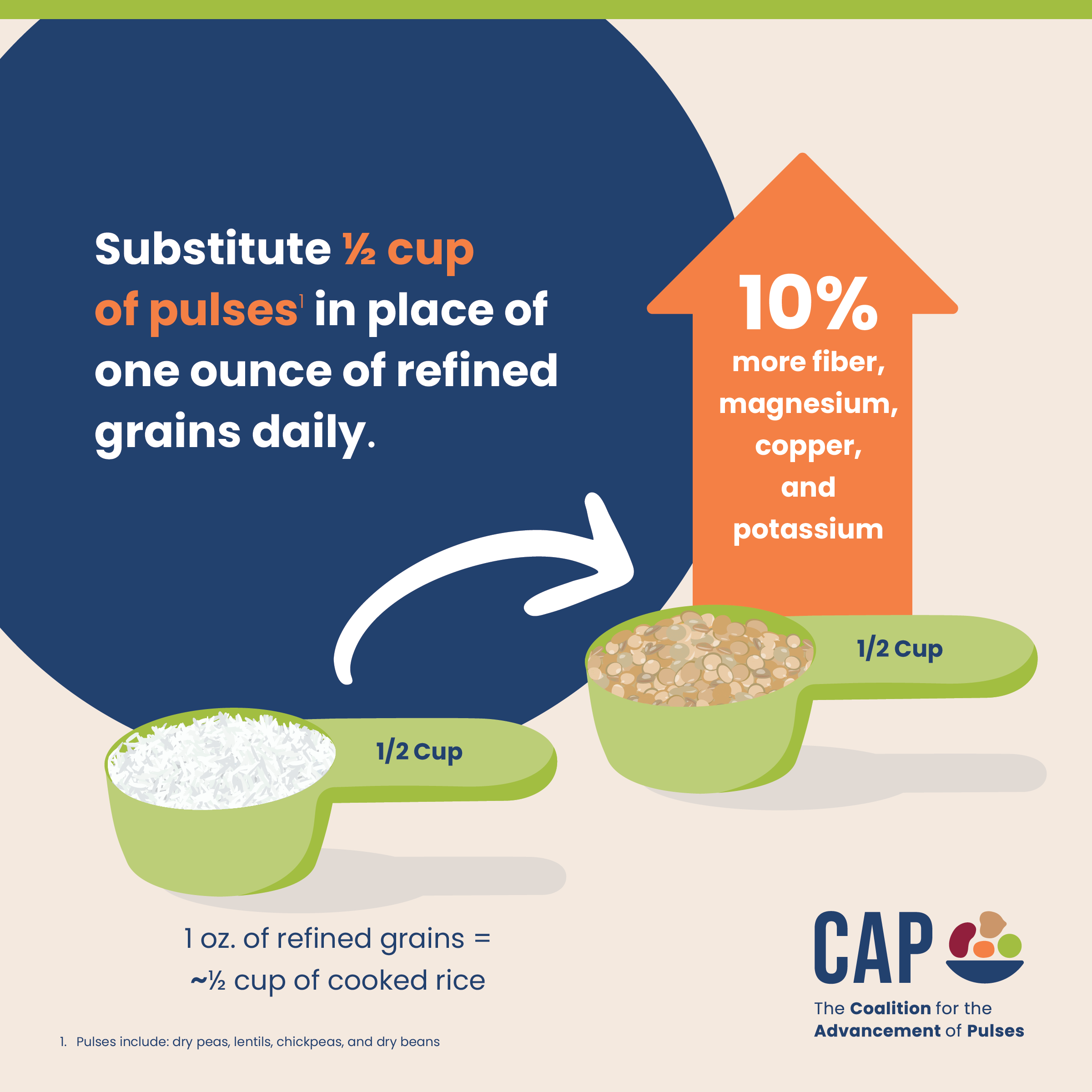
Researchers modeled the nutritional impact of substituting servings of protein foods and/or refined grains with servings of pulses (e.g. dry peas, lentils, chickpeas, dry beans) while keeping calories consistent in the Healthy U.S.-Style Dietary Pattern identified in the 2020-2025 Dietary Guidelines for Americans. Results showed an improved nutritional profile of the diet. Specifically, the addition of about ¼ cup of pulses per day in place of one ounce per day of common protein foods increases fiber, a nutrient of concern, and decreases cholesterol, each by more than 10%. Additionally, they found that substituting ½ cup of pulses daily in place of one ounce of refined grains daily also while keeping calories constant increases fiber, magnesium, copper, and potassium, a nutrient of concern, by more than 10%.
“Our results suggest that encouraging increased pulse consumption may be an effective strategy for improving nutrient intake and achieving a healthier dietary pattern,” states author Victor Fulgoni III, PhD, of Nutrition Impact, LLC. “Pulses (dry peas, lentils, chickpeas, beans) are excellent sources of fiber, folate and potassium and good sources of plant protein. The study was funded by the Coalition for the Advancement of Pulses.
The findings are consistent with the body of existing peer-reviewed studies that show the inclusion of pulses as part of a plant-forward dietary strategy imparts cardiovascular, metabolic, and gut protective effects; improves weight outcomes, low-grade inflammation, and may play a role in immune-related disease risk management.ii The American Heart Association and other public health organizations recommend adding more plant-based proteins and less animal protein to reduce risk of heart disease, high blood pressure and high cholesterol.iii
“This research underscores the fact that pulses are a nutritional powerhouse,” said Tim McGreevy, CEO, USA Dry Pea and Lentil Council and American Pulses Association. “They are high in fiber, plant protein and several important macronutrients. We know this and are working with our partners to increase awareness about the nutritional benefits of regular pulse consumption.”
Pulses are so nutritious that dietary guidelines globally include them in both the vegetable and/or protein food groups or as a separate food group all together. i, iv,v,vi The Dietary Guidelines for Americans 2020 – 2025 and the USDA’s Choose My Plate indicate that beans, peas, and lentils can be considered as part of the vegetable or protein groups.
ABOUT THE COALITION FOR THE ADVANCEMENT OF PULSES
The CoaliCon for the Advancement of Pulses (CAP) is an iniCaCve led by the American Pulse AssociaCon (APA) with support from the USA Dry Pea and LenCl Council (USADPLC) and the Pulse FoundaCon and represents a collecCve of pulse crop growers, processors, manufacturers, and related organizaCons. CAP is commiQed to increasing the consumpCon of pulses in the United States by increasing research on the nutriConal benefits of pulses and growing awareness about the many health benefits of pulses. For more informaCon contact CAP@usapulses.org
i Agarwal S, Fulgoni VL 3rd. Effect of Adding Pulses to Replace Protein Foods and Refined Grains in Healthy Dietary PaDerns. Nutrients. 2023 Oct 13;15(20):4355. doi: 10.3390/nu15204355. PMID: 37892430; PMCID: PMC10610119.
ii Mullins AP, Arjmandi BH. Health Benefits of Plant-Based Nutrition: Focus on Beans in Cardiometabolic Diseases. Nutrients. 2021 Feb 5;13(2):519. doi: 10.3390/nu13020519. PMID: 33562498; PMCID: PMC7915747.
iii hDps://www.heart.org/en/news/2021/08/04/eaXng-a-plant-based-diet-at-any-age-may-lower-cardiovascular-risk
iv Hughes, J.; Pearson, E.; Grafenauer, S. Legumes—A Comprehensive ExploraXon of Global Food-Based Dietary Guidelines and ConsumpXon. Nutrients 2022, 14, 3080. hDps://doi.org/10.3390/nu14153080
v hDps://www.fao.org/3/bl626e/bl626e.pdf
vi Marinangeli CPF, Curran J, Barr SI, Slavin J, Puri S, Swaminathan S, Tapsell L, PaDerson CA. Enhancing nutriXon with pulses: defining a recommended serving size for adults. Nutr Rev. 2017 Dec 1;75(12):990-1006. doi: 10.1093/nutrit/nux058. PMID: 29202192; PMCID: PMC5914352.