
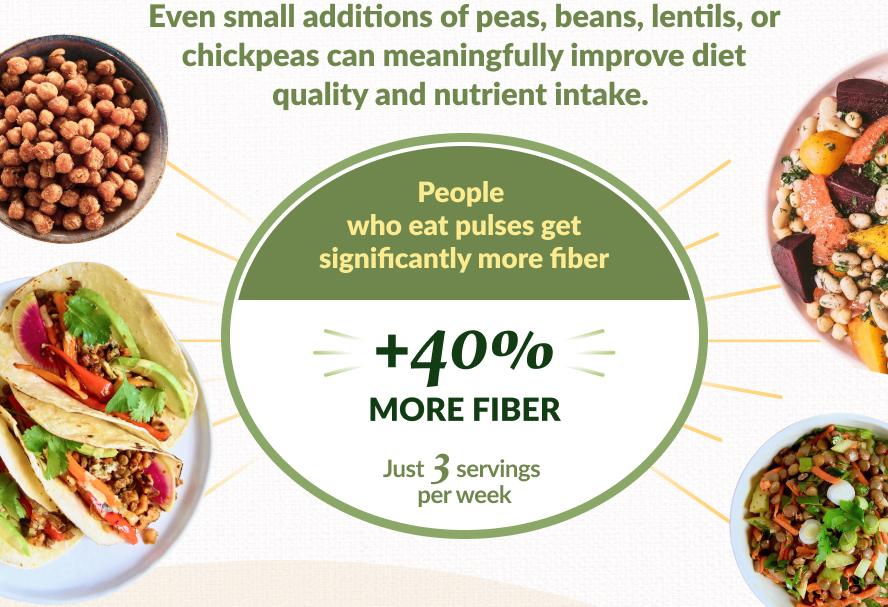
New peer-reviewed research finds three servings of pulses per week can significantly improve diet quality and overall health – yet 2-in-3 Americans do not eat these foods regularly
MOSCOW, Idaho, April 30, 2026 — A new peer-reviewed study finds that Americans who regularly eat beans, chickpeas, lentils, and dry peas have significantly healthier diets and consume more of the nutrients most Americans lack, signaling a simple solution to fix dietary deficiencies that put people at risk of chronic disease.
Published in Food & Nutrition Journal, the study analyzed data from 17,234 U.S. adults and found significantly healthier diets among Americans who regularly consume pulses, the collective term for beans, chickpeas, lentils, and dry peas, compared to those who do not.
The study found that only one-in-three American adults reported eating pulses regularly, indicating that most U.S. diets are missing out on the nutritional benefits that these foods provide.
Compared to non-consumers, people who ate pulses scored higher on a federal measure of diet quality, consuming less added sugar and more of the nutrients needed for health, including fiber, protein, iron, magnesium, potassium, and folate. Pulse consumers were less likely to suffer from vitamin and nutrient deficiencies. The study found that pulse consumption improved adequacy across several vitamins and minerals, including magnesium, calcium, zinc, and vitamins A, B, C, and E.
Even small dietary changes made a meaningful difference. Eating just 1.5 cups of pulses per week, or three half-cup servings, improved overall diet quality and increased intake of nutrients like fiber, folate, and iron. Increasing intake to 3 cups per week led to even greater gains, including higher potassium intake and improved overall nutrient adequacy.
The findings come at a time when diet-related chronic diseases such as obesity, diabetes, and heart disease continue to rise in the United States, alongside widespread shortfalls in essential nutrients like fiber, potassium, calcium, iron, and magnesium, and align with the 2025–2030 Dietary Guidelines for Americans, which emphasize nutrient-dense, minimally processed foods and practical dietary patterns that support long-term health.
“Adding beans, peas, lentils, or chickpeas to your plate just a few times a week is one of the easiest, most affordable ways to eat healthier,” said Tim McGreevy, CEO of USA Pulses. “Too many Americans are eating diets low in fiber and key nutrients; a pattern linked to chronic diseases like diabetes, obesity, and certain cancers. This study reveals how a simple change can close those deficiencies and improve our health through real, nutrient-packed foods.”
Pulses are a unique food in that they provide fiber and potassium like vegetables while also serving as a good source of protein, making them a versatile and flexible option to add more nutrients to everyday meals. That could mean adding chickpeas to salads, using lentils in addition to ground meat, or incorporating beans into soups and grain bowls.