June 11, 2026
The Honorable Brooke L. Rollins Secretary
U.S. Department of Agriculture 1400 Independence Ave., SW
Washington, DC 20250
Dear Secretary Rollins and FNS Leadership,
We, the undersigned producers, vendors, trade groups, and foodservice professionals are writing to ask the USDA to expand crediting flexibility for pulse-based pastas and ensure full representation of these products in the Food Buying Guide.
Pulses, including dry beans, chickpeas, dry peas, and lentils, are nutrient-dense foods that provide dietary fiber, protein, iron, potassium, and other essential nutrients.1 They play a critical role in supporting children’s health by helping address fiber gaps, improving gut health, and contributing to the prevention of chronic diseases, consistent with goals outlined in the 2025–2030 Dietary Guidelines for Americans.2
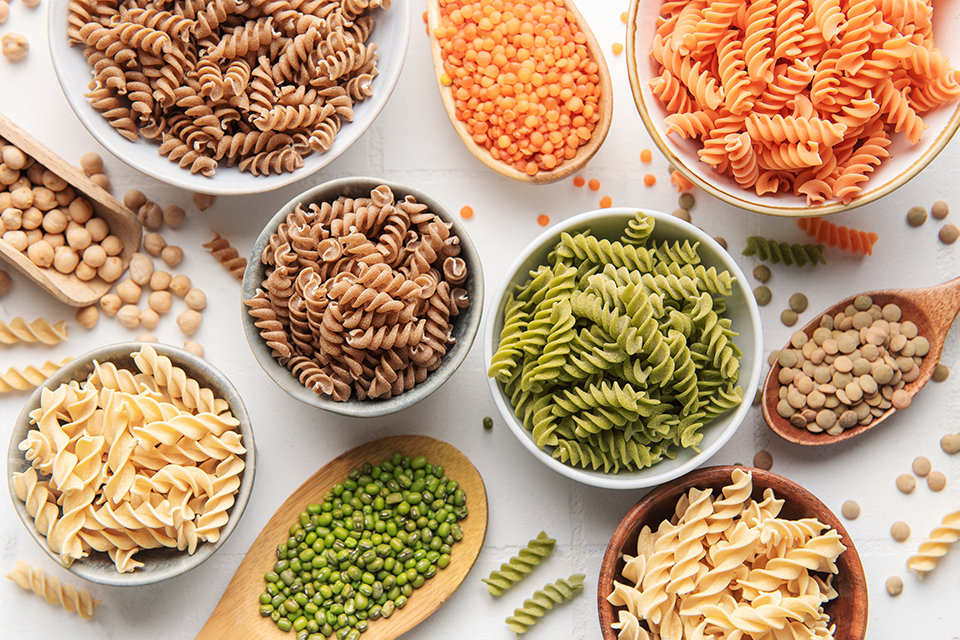
Incorporating a variety of pulse-based foods, including whole pulses, pulse-based pastas, and pulse flours, provides schools with flexible, nutrient-dense options that support children’s dietary needs. Pulse-based pastas, for example, allow schools to offer an entree high in protein and fiber while simultaneously accommodating students who are gluten-intolerant, follow vegan or vegetarian diets, or have other dietary restrictions and allergens. Clear USDA policies and guidance that fully reflect the range of pulse ingredients used in schools would help operators plan menus more efficiently, promote menu innovation, and ensure meals are both nutritious and accommodating for students.
We offer two key recommendations to support the effective inclusion of pulse-based products in school meal programs:
Create consistency by allowing pulse-based pastas to credit as M/MA without a visually recognizable M/MA served alongside it
Current school meal pattern guidelines appropriately recognize that pasta made from pulse flours retains the nutritional benefits of pulses and allow pulse-based pastas to credit as a vegetable without requiring a visually recognizable vegetable to be served alongside the product. Confoundingly, despite pulses being able to credit as M/MA or Vegetable, USDA’s guidance requires that when pulse-based pastas credit as M/MA, they must be paired with an additional meat or meat alternate.3 There is no justification for the disparate treatment of pulse-based pastas crediting as vegetables versus M/MA in the DGA.
This creates practical and financial challenges for school food operators. As one foodservice operator from a large district put it: 2780 W Pullman Rd • Moscow, ID 83843-4024 USA 208.882.3023 • info@usapulses.org • www.usapulses.org
“Right now, schools could either serve red lentil pasta with a visually recognizable M/MA, which would likely be meat, or they could serve red lentil pasta with veggies as a side. We wanted to serve a lentil penne with vegetables as an entrée, but because the lentil penne can’t meet the full M/MA requirement on its own, we had to serve it as a vegetable side dish. We decided to discontinue it, because it was not financially sustainable as a side.”
We recommend that USDA address this unnecessary regulatory burden by expanding crediting flexibility to allow pulse-based pastas to credit toward the M/MA component on their own, without requiring an additional M/MA. This change would more accurately reflect the protein contribution of pulse-based pasta, reduce confusion for school nutrition operators, and provide schools with greater flexibility to meet the nutritional needs of students through fiber and protein-rich pulse products.
Ensure that pulse-based flours are appropriately credited
USDA should also update the Food Buying Guide (FBG) to more clearly reflect the growing use of pulse-based ingredients in school foods. Currently, bean flour is listed in Appendix C rather than within the standard creditable food listings, which can create uncertainty for school nutrition professionals seeking to determine how these ingredients contribute toward meal pattern requirements. Moving bean flour into the primary creditable listings and expanding the listing to explicitly include common pulse flours such as chickpea (garbanzo bean), lentil, and dry pea flours would provide clearer guidance for schools and align the FBG with the increasing availability of products made entirely from pulse ingredients, including pulse-based pastas.
Providing clearer pathways for how pulse flours credit in school meals would support menu innovation, improve consistency in program implementation, and encourage the use of nutrient-dense pulse ingredients in Child Nutrition Programs.
Conclusion
Pulses are a versatile, nutrient-dense food group that can play a critical role in improving gut health and reducing chronic disease incidence for students nationwide. By expanding crediting flexibility for pulse-based pastas and ensuring that pulse flours are fully and clearly represented in the Food Buying Guide, USDA can provide school nutrition operators with the clarity and flexibility needed to incorporate these important foods into menus.
These updates would better reflect the nutritional contributions of pulses, support menu innovation, simplify implementation, and help schools meet both protein and fiber needs in alignment with the Dietary Guidelines for Americans. We urge USDA to adopt these recommendations to strengthen child nutrition programs and ensure students have consistent access to nutritious, appealing meals. 2780 W Pullman Rd • Moscow, ID 83843-4024 USA 208.882.3023 • info@usapulses.org • www.usapulses.org
Sincerely,
U.S. Pulse Crop Industry & Coalition
AGT Foods USA
Anderson Northwest, LLC
Banza
Columbia Grain International
Idaho Pea & Lentil Commission
Midwest Dry Bean Coalition
Montana Pulse Crop Committee
Nebraska Dry Pea & Lentil Commission
New York Bean, LLC
North Dakota Dry Pea & Lentil Council
Northarvest Bean Growers Association
Northern Pulse Growers Association
NuCicer, Inc.
New York State Dry Bean Association
PURIS
South Dakota Pulse Crop Council
Spokane Seed Company 2780 W Pullman Rd • Moscow, ID 83843-4024 USA 208.882.3023 • info@usapulses.org • www.usapulses.org
USA Pulses
USA Pulses Trade Association
Western Pulse Growers Association
Washington Pulse Crops Committee
School Districts
Chicopee Public Schools, Massachusetts
Durango District 9-R, Colorado
Galt Joint Union Elementary School District, California
New West Charter School, California
Tamalpais Union High School District, California
Trenton Special School District, Tennessee
Walnut Creek School District, California
YES Charter Academy, California
Allied Industry Partners
Academy of Nutrition and Dietetics
Association of State Public Health Nutritionists, North Carolina
Balanced, Inc.
Black Veg Society
Calman Farms, New York 2780 W Pullman Rd • Moscow, ID 83843-4024 USA 208.882.3023 • info@usapulses.org • www.usapulses.org
Center for Biological Diversity
Chilis on Wheels
Coalition for Healthy School Food
David Christensen Farm, New York
Eating Well with Janel
Echo Crest Farms, New York
EmpowerMe Diabetes Health
Fresh Med NYC
Friends of the Earth
Greenlyfe Nutrition
Healthy Kids Happy Planet
Ithaca Soy
Jewish Vegan Life
John R Wallace Farms, New York
Kailo Nutrition
Lotus Lifestyle Medicine
Lucy Hicks Consulting
Luv Box LLC
Mendon Grain of NY, LLC 2780 W Pullman Rd • Moscow, ID 83843-4024 USA 208.882.3023 • info@usapulses.org • www.usapulses.org
Nature’s Dietician®
New Roots Institute
Nourish Colorado
NW Indiana Food Council
Pinnacle Prevention
Plant-Based Juniors
Plantrician Project
Purely Planted
Real Food for Kids
Tribal Health of the Confederated Salish and Kootenai Tribes
Woody Acres Farm, LLC
Individual School Foodservice & Nutrition Professionals
Mary Bonsall, Culinary Program Manager, Virginia
Kym Bower, Food Service Innovation Specialist, California
Kati Burton, Registered Dietitian, Montana
Kelly Combs, School Nutrition Programs Coordinator, Virginia
Alexandra Bhalani, Registered Nurse, Florida
Andrea Cullers, Professor, Missouri
Kimberly Dao, Family Physician/PCP, Florida 2780 W Pullman Rd • Moscow, ID 83843-4024 USA 208.882.3023 • info@usapulses.org • www.usapulses.org
Cassie Davidson, Child Nutrition Director, Washington
Layla Gibson, Coordinator, Food Service Innovation, Washington
Angela Gomez, Nutrition & Wellness Supervisor, Arizona
Barbara Harrison, New York
Amy Harrington, Dietetic Intern, Missouri
Cheri Hobbs, Farm to School Coordinator, Washington
Kellene Isom, Associate Professor, California
Nitya Jakka, Student, Illinois
Gratia Lee, Co-Executive Director, Michigan
Blake Lineweaver, Local Food Promotion Program Manager, Montana
Liz Clark, Food Service Innovation Coordinator, Texas
Autumn Martin, Nutrition Services Director, Georgia
Stephanie McBurnett, Nutrition Educator & Registered Dietitian, Washington
Deborah Milkowski, Physician, North Carolina
Sara Murray, Registered Dietitian, District of Columbia
Dorrie Nang, Manager, Connecticut
Phefelia Nez, Consultant, Arizona
Kitty Oppliger, Community Nutrition Advisor, California
Truddie Reif, Registered Dietitian, Florida 2780 W Pullman Rd • Moscow, ID 83843-4024 USA 208.882.3023 • info@usapulses.org • www.usapulses.org
Laura Ridneour, Washington
Suzy Sayre, Director of Nutrition Services, California
Lindsay Schmitz, Owner, Live Smarter Nutrition & Wellness, Pennsylvania
Diane Smith, Educator, Washington
Krista Smith, Program Coordinator, Iowa
Jason Tepper, Executive Chef, Virginia
Keyur Thakar MD, MPH, Physician, New York
Angela Thomas, Area Supervisor, South Carolina
Amanda Trenchard, Program Manager, Virginia
Crystal Tunstall, Educator, Michigan
Shailee Varanasi, Dietitian Nutritionist 3, Missouri
Lisa Zatcoff, Health Educator, Arizona
Sources
1 Biscarrat, P., Bedu‑Ferrari, C., Langella, P., & Cherbuy, C. (2024). Pulses: A way to encourage sustainable fiber consumption. Trends in Food Science & Technology, 143, 104281. https://doi.org/10.1016/j.tifs.2023.104281; Mayo Clinic. (2025). Chart of high-fiber foods. https://www.mayoclinic.org/healthy-lifestyle/nutrition-and-healthy-eating/in-depth/high-fiber-foods/art-20050948 (Pulled from the USDA National Nutrient Database for Standard Reference, Legacy Release);
2 United States Department of Health and Human Services and United States Department of Agriculture. (2026) The Scientific Foundation For The Dietary Guidelines For Americans. https://cdn.realfood.gov/Scientific%20Report_508.pdf
3 United States Department of Agriculture, Food and Nutrition Services Memo SP26 CACFP13 SFSP12-2019 Revised, Crediting Pasta Products Made of Vegetable Flour in the Child Nutrition Programs (Apr. 17, 2019). Available at https://www.fns.usda.gov/cn/crediting-pasta-products-made-vegetable-flour-child-nutrition-programs.