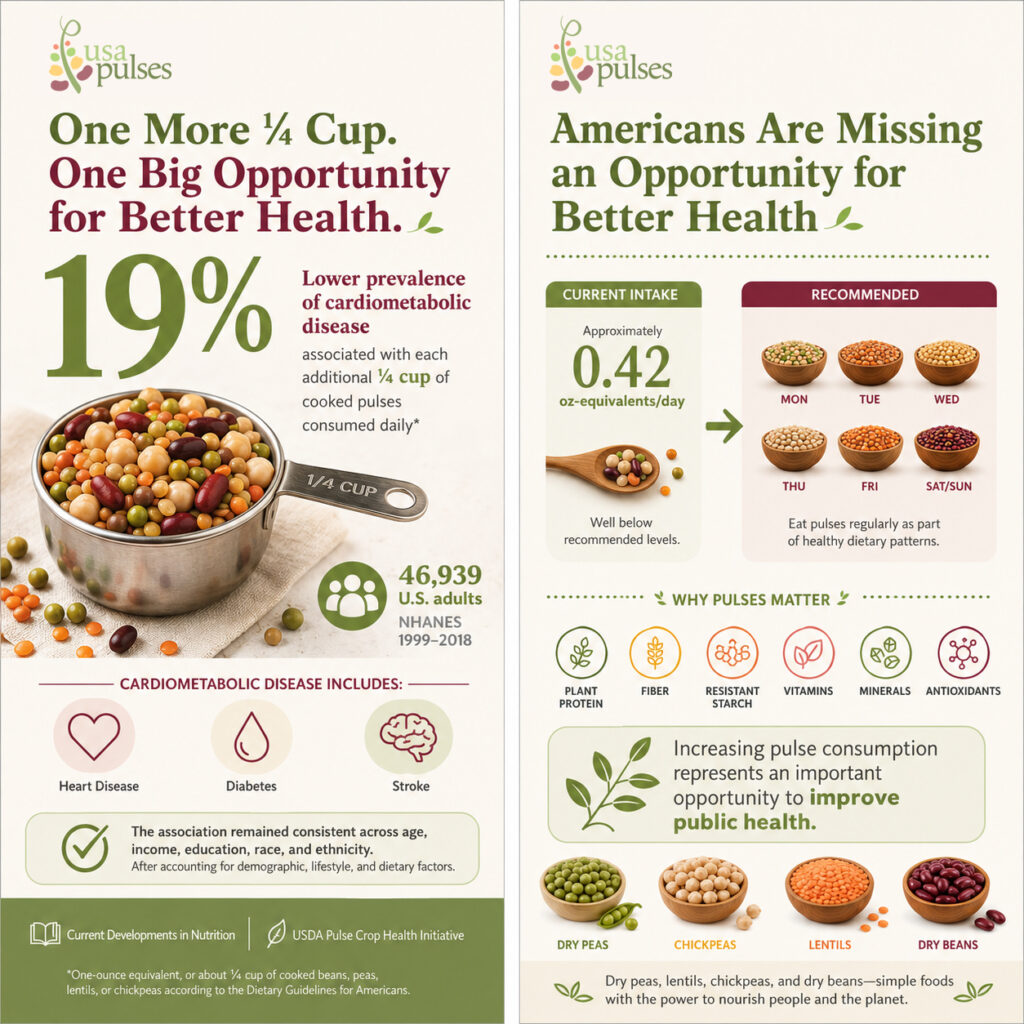

Research of nearly 47,000 U.S. adults finds each additional 1/4 cup of cooked pulses per day is associated with a 19% lower prevalence of cardiometabolic disease
A new nationally representative study found that adults who consume more pulses—including dry peas, lentils, chickpeas, and dry beans—have a significantly lower prevalence of cardiometabolic disease (CMD), providing new evidence that increasing pulse consumption can play an important role in improving public health.
Published in Current Developments in Nutrition, the study analyzed health and dietary data from 46,939 U.S. adults collected through the National Health and Nutrition Examination Survey (NHANES) between 1999 and 2018. Researchers found that each additional daily serving of pulses—one-ounce equivalent, or about ¼ cup of cooked beans, peas, lentils, or chickpeas according to the Dietary Guidelines for Americans—was associated with a 19% lower prevalence of cardiometabolic disease after accounting for demographic, lifestyle, and dietary factors.
Cardiometabolic diseases, including heart disease, stroke, and diabetes, remain among the leading causes of illness and death in the United States. Researchers noted that pulse consumption remains well below recommended levels across all population groups, highlighting an important opportunity to improve health through increased consumption.
“This research adds to the growing body of evidence demonstrating that pulses are an important part of a healthy dietary pattern,” said Tim McGreevy, CEO of USA Pulses. “As affordable, nutrient-dense foods, dry peas, lentils, chickpeas, and dry beans provide consumers with a healthy and delicious way to support long-term heart and metabolic health.”
The study also found:
- The association between pulse consumption and lower cardiometabolic disease prevalence was consistent across age, income, education, race, and ethnicity, suggesting the potential benefits extend broadly across the U.S. population.
- Average pulse consumption among Americans remains low—approximately 0.42 ounce-equivalents per day—well below dietary recommendations.
Pulses are naturally rich in plant protein, dietary fiber, resistant starch, vitamins, minerals, and antioxidants that have been shown to support healthy blood sugar, cholesterol, blood pressure, and overall cardiovascular health. The researchers conclude that increasing pulse consumption represents an important opportunity for improving public health and reducing the burden of chronic disease.
The research, “Greater Intake of Pulses Is Associated with Lower Prevalence of Cardiometabolic Diseases among Adults in the United States: NHANES, 1999 to 2018,[MI1] “ was published in Current Developments in Nutrition and was supported by the USDA Agricultural Research Service Pulse Crop Health Initiative. The authors noted that the funding organization had no role in the study design, analysis, interpretation, or publication decisions.